
Organizing the Future, or Declining with It
Why modernity must be governed, not feared, in order to fully benefit from it


‘We do not endure the future, we make it.’ Georges Bernanos
The West’s right wing is undergoing a profound crisis: it suffers from a strategic vacuum. Over several decades, it has gradually given up on formulating a positive and desirable vision of the future, preferring to settle into a posture of constant reaction to the projects of the left. It criticises, it delays, it amends, but it no longer defines what the future of our nations will be. However, in a world structured by technological acceleration, industrial competition and the brutal return of power relations, this attitude is not neutral: it is an implicit choice of downgrading towards irrelevance.
Modernity is not an ideological current that can be accepted or rejected at will. It is the framework within which the hierarchy of nations now plays out. States that organise the future dominate those that suffer it. Recent history is unambiguous: it is the countries capable of planning innovation, anticipating technological breakthroughs and structuring their power over the long term that impose their standards, their economic model and their vision of the world. By abandoning its ambition to shape this modernity, the right has left it to the left to define the contours of the future on its own, reserving for itself at best the role of a restraining force, never that of a driving force.
This renunciation is all the more paradoxical given that the great right-wing governments have always been right-wing governments of projection, construction and power. They were not afraid of the future; they organised it. Today, part of the right prefers to take refuge in nostalgia, symbols or the aesthetics of the past, confusing identity with decor, heritage with immobility. But a nation cannot sustain itself by contemplating what it once was. It survives and prospers through its ability to decide what it wants to become. At a time when the left doubts progress and fears modernity, the strategic vacuum on the right is not inevitable: it is an abdication.
Modernity is Now the Primary Source of Power
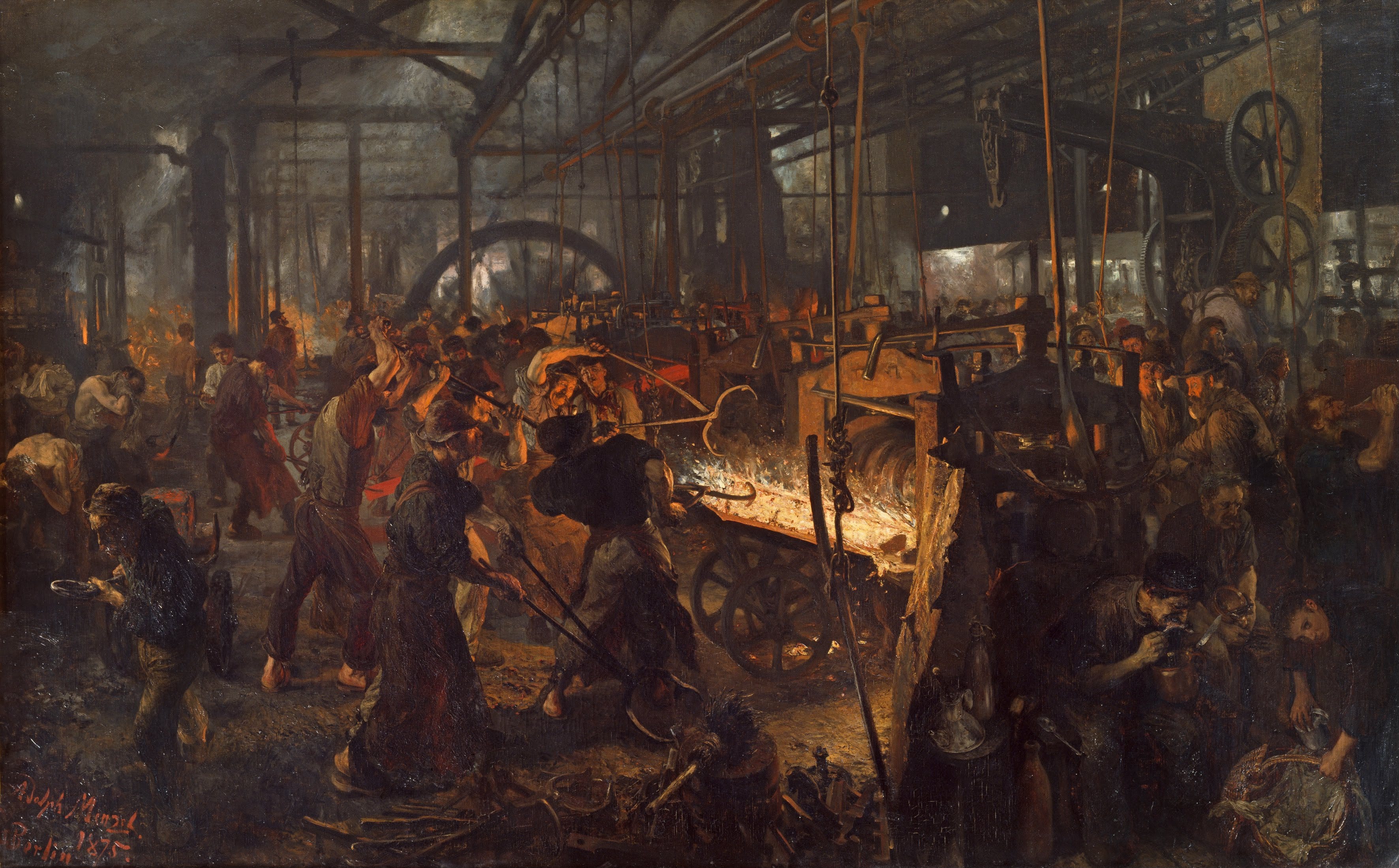
Since the Industrial Revolution, the very nature of power has undergone a profound transformation. Where geography and demographics once dominated, it is now a state’s ability to organise the future that prevails. Contemporary power is no longer measured solely by what one possesses, but by what one is capable of projecting, planning and achieving over the long term. It has become inseparable from a conscious and deliberate mastery of modernity.
The modern army, heavy industry, energy and digital infrastructure are not the result of automatic progress. They are the product of state will, strategic foresight and coordination between public and private actors. These essential elements of a nation’s power are symptoms of a modern nation. In fact, when properly anticipated, organised and constructed, modernity ceases to be a constraint and a danger and becomes a lever for increased power. Modernity is therefore not something that happens to nations, but something that certain nations decide to produce, regulate and guide.
Comparative observation of national trajectories confirms this reality with relentless clarity. Hong Kong and Singapore are perfect examples. Devoid of significant natural resources, deprived of strategic depth and constrained by limited demographics, these territories have nevertheless achieved major international standing. Their success is neither due to chance nor to a supposed cultural exception, but to a methodical and proactive organisation of the future. Massive investment in human capital, strategic integration into global trade flows, first-rate logistics infrastructure, institutional stability and legal predictability: these are all deliberate choices that have transformed objective constraints into sustainable comparative advantages.
Conversely, countries with considerable assets, such as Nigeria and Ethiopia, remain locked in a peripheral position. They have large populations, significant natural resources and real economic potential, but are chronically unable to structure a coherent modern trajectory. The lack of planning, weak institutions and inability to project a long-term vision condemn these countries to suffer modernity rather than benefit from it. Modernity thus acts as a geopolitical selection filter: it rewards those who master it and marginalises those who abandon themselves to it without direction.
Modernity is not ideologically left-wing. It is neither the preserve of moral progressivism nor the monopoly of any political camp. It is above all a relationship with the future, based on anticipation, strategic optimism and the will to act. It is a tool that does not belong to any side, but longs to be used. This is all the more true today, as a growing section of the contemporary left views the future as a threat to be contained: an ecological, technological and social threat. This mistrust is reflected in degrowth rhetoric, widespread suspicion of innovation and regulatory inflation that hinders initiative. This Luddite tendency on the part of the Western left is an exceptional opportunity for the right seize the future it wants to see.
The right wing has not been dispossessed of modernity by a more convincing ideological adversary. It has abandoned it through intellectual withdrawal. By giving up on thinking about the engineering of the future, it has left it to others to define its contours, norms and purposes. Yet nothing in modernity is incompatible with order, sovereignty or historical continuity. On the contrary, it presupposes a political authority capable of deciding, planning and taking on long-term structural choices. As Peter Thiel points out in Zero to One, as the future cannot be predicted, it must be built. Refusing to build it means accepting that it will happen without us, and more often than not to the detriment of our interests.
The Eye-Wateringly High Cost of Refusing to Shape the Future
In the absence of a positive and structured vision for the future, the right wing has condemned itself to a secondary position in the political debate. Unable to propose a desirable future, it merely comments on that of the left, denouncing its excesses or delaying its implementation. But it never really changes its course. Those who define the horizon impose the intellectual and political framework. The others simply adapt to it.
This situation produces a largely imposed modernity. Today, thanks to the resignation of the right, the left sets the moral and legal standards, while the right negotiates exceptions or delays. Objectives are defined without it, with discussion limited to the pace of implementation. In the social sphere, the direction of history is presented as irreversible, with the right contenting itself with cushioning its effects. It acts downstream of structural decisions, rarely upstream, and almost never at the source.
This renunciation is accompanied by a disappearance of long-term strategic thinking. The big questions are avoided or dealt with in a fragmentary manner: what do we want our country to be in twenty, fifty or a hundred years’ time? What place in the hierarchy of powers? What industrial, military or technological specialisation? What form of prosperity and what social model? By refusing to define a project towards which our nations should strive, the right leaves the definition of modernity to the left and resigns itself to enduring a modernity that it has failed to define.
Yet history shows that the great right-wing governments have always been right-wing governments of projection and modernisation. Napoleon III was one of the most modernist leaders of the 19th century. He committed France to the industrial revolution through the massive development of the railways, the growth of bank credit, the transformation of Paris by Haussmann, the modernisation of ports and a policy of major public works. His ambition was not to restore the Ancien Régime, but to bring France into the European industrial modernity.
‘To govern is to foresee’ Napoleon III
De Gaulle, a century later, followed the same logic. His right wing was a technical, planning-oriented and resolutely forward-looking right wing. Nuclear deterrence, space programme, energy independence, strategic state, industrial policy, diplomatic autonomy: Gaullism was a rare synthesis of political authority, technological modernity and national sovereignty. These right-wing movements were not conservative in the passive sense. They were futuristic, proactive and deeply modernising.
When symbols replace strategy and memory replaces power

‘The past only illuminates the future when we do not settle into it.’ Alexis de Tocqueville
Faced with this lack of a clear agenda, part of the right wing has taken refuge in symbols and aesthetics. Political projects have gradually been replaced by posturing, window dressing and nostalgia. Costumes, references to the monarchy, heraldry and civilisational discourse have become substitutes for strategic thinking. But symbols do not govern, and aesthetics do not shape the future.
This drift is based on a fundamental confusion between identity and project. Identity is a living heritage, forged by history, institutions and the real people. It is not a fixed backdrop. When it replaces political action, it becomes a refuge and a pretext for inaction.
The episode of the Count of Chambord is the most emblematic illustration of this. Between 1871 and 1873, when the restoration of the monarchy was politically possible, Henri d’Artois, Count of Chambord and heir to the French throne, refused to ascend to the throne if he had to accept the blue, white and red flag, a symbol that had been part of French state continuity since the Revolution. In 1873, his definitive refusal sealed the failure of the restoration. In the name of symbolic purity, he rejected an emblem that already embodied France’s military, administrative and popular history. This choice reveals a right wing that preferred heraldic abstraction to the exercise of real power, a fixed symbol to lived identity.
Governing means accepting reality in order to transform it. To reject reality in the name of an aesthetic ideal is to renounce governance. To detest modernity without seeking to shape it is to let the adversary write the rules. A ‘revolt against the modern world’ that rejects the political arena is not a revolt, but an abdication. It condemns the right to intellectual marginality and historical impotence. We cannot afford to simply retreat to aesthetics and old manners, as it will end any chance for Modernity to be shaped as we would want it to be.
For a modern, sovereign, and governing Right
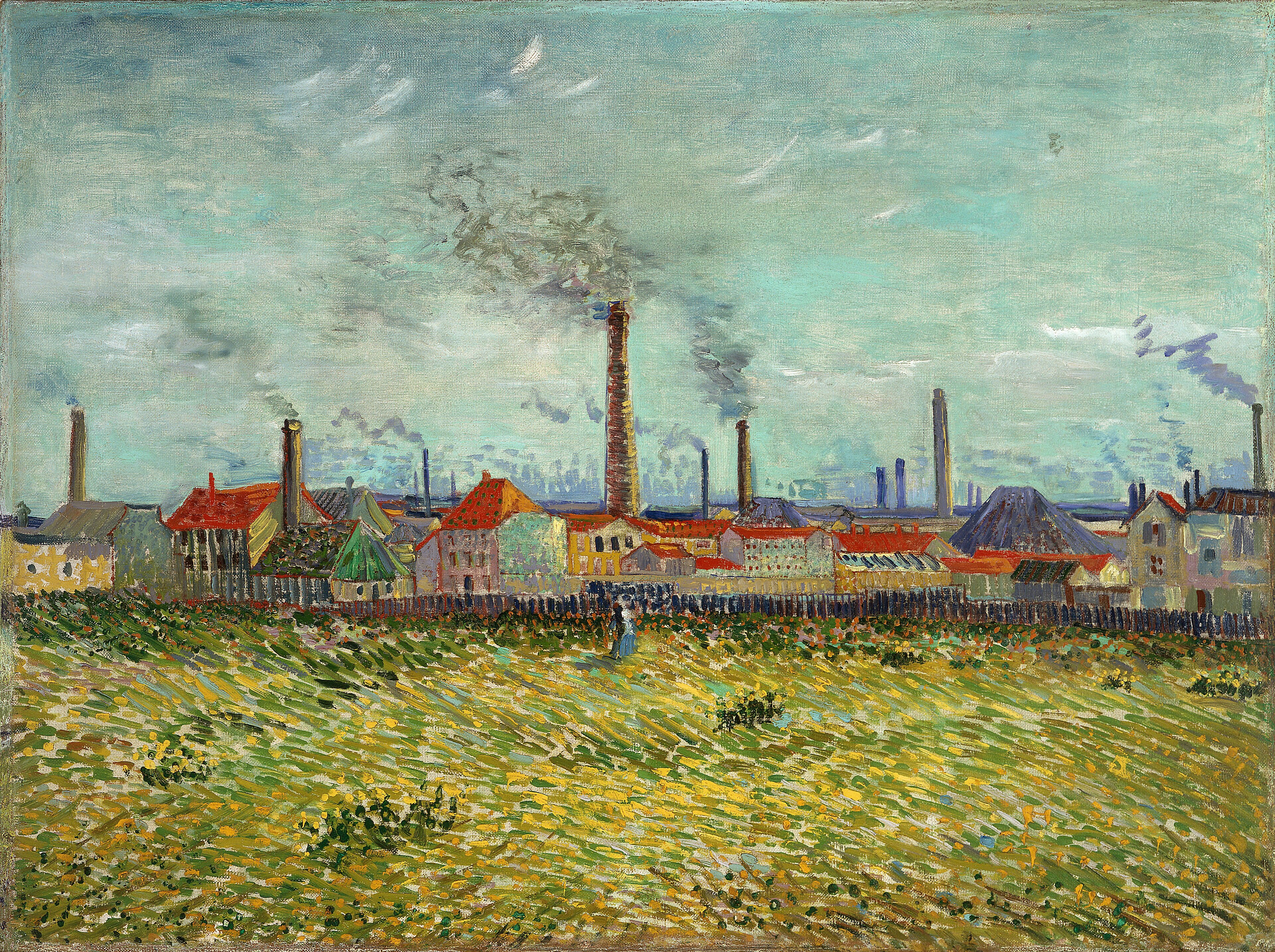
The right wing has no shortage of historical references or intellectual resources. What it lacks is a clear, positive and self-sustaining project. The right wing’s project must be positive : it must assert a project that is defined not by what it rejects but by what it proposes. A genuine positive project is then self-sufficient by nature: it affirms itself without any need for the opposing side to exist, because its strength and identity come from within, not from reaction to an opposite project. Such a project can and must be structured around a simple and structuring triptych: sovereignty, prosperity and order, enshrined in a chosen and assumed modernity.
Sovereignty must first be concrete. Industrial sovereignty, through energy, defence and strategic sectors. Technological sovereignty, in artificial intelligence, semiconductors and critical digital infrastructure. Finally, decision-making sovereignty, so that the standards that structure our economy and society are written at home, not passively imported.
Prosperity must be fully embraced. Faced with a left wing that is increasingly suspicious of growth, innovation and technology, the right wing can defend a clear ambition to create wealth and organised abundance. Prosperity is neither a luxury nor a moral vice. It is a prerequisite for social stability, collective power and national continuity.
Finally, modernity must be orderly. A modernity focused on collective power, compatible with order, transmission and duration. There is no innovation without stability, no freedom without security, no prosperity without clear rules. It is on this condition that the right can once again become a force for progress, rather than a mere brake on the history of others.
Great post.
Thanks very much for sharing it.